|
|

Gaulish Deities
workshop notes
-Michael J Dangler
I. Sources
- One of the few things that we know about the source material is that there is very little of it. With no current speakers of the language, no major writings by the Gaulish tribes themselves, and no strong movement of current worshipers, we are generally left in the dark.
- For some deities, we have evidence hidden in a Romano-Celtic cloak.
- These names give us an idea of what the deity was associated with
- Apollo-Belenos (Shining Deity, potentially sun, "bel"="bright/shining")
- Mercury-Moccus (Boar Hunter? "moccus"="pig/hog")
- Mars-Camulos (war god, "camul"="able, powerful")
- For some deities, we have Roman cults
- Epona is the prime example.
- For some we have literary references
- Dis Pater, Mercury, and Mars are all mentioned in Caesar's The Gaulish War.
- If only we knew which deities these were.
- For some, we have extensive iconography to tell a story.
- Cernunnos, where we get one name that seems to apply very nicely to a wide spectrum of deities.
- Nehalennia (probably an import from indigenous religion on the coast)
- For some, we have a name, two lines in a poem, and two reliefs that appear to correlate.
- Esus is a prime example here.
- For the purposes of this outline, we are conveniently ignoring the assertion of Diodorus Sicullus that the Gauls had no anthropomorphic deities.
II. Pantheon and Deity Names:
- Any attempts to create a pantheon of Gaulish deities is going to be artificial.
- We can see very easily that the Gauls had a tribal system that was more loosely organized than the Greeks, who had one group of deities that most cities might have worshiped.
- The Gauls are very different. These tribes appear to only really begin sharing deities when the Romans begin to influence art and culture, and this takes off around 50 BC with conquest and occupation.
- Something to think about: Is Gauilsh religion a construct of Roman religion, and to what extent?
- That said, please do not expect this outline to even attempt to cover all the deities of Gaul, and please don't think about "pantheons". We simply don't have the information to construct them on a local level, and that might be the only useful level.
- Names:
- Please note that we don't have names for Celtic deities; we have titles. It is very proper to go ahead and translate these titles when it benefits, and it's just as proper to use the title as a name.
III. Esus, Teutates, and Taranis
And those who pacify with blood accursed
Savage Teutates, Esus' horrid shrines,
And Taranis' cruel altars, awe-inspiring
as those of the Scythian Diana!
-Lucan, Pharsalia
- This is the only literary evidence from the ancient world we have for any of these deities.
- The Berne Commentaries are the only other literary sources. These came out of the 9th Century, and Miranda Green seems confident that the commentators (two unknown monks) had access to earlier, now lost records, but I'm not sure about that. I'd take anything in the Commentaries with a grain of salt, and might suggest that they be used only minimally when comparing.
- Esus
- When I started studying Esus, I did a quick search of the web for good sites. What I got were Christian sites about "Hesus" and "Jesus" (both of which have "esus" in their names), and a few sites about how people think that Esus is a pre-Christian monotheistic holdover from the early Abrahamic traditions.
- I also came across the following description on every website related to Paganism:
- "Esus - Gaulish deity associated with Mercury and Mars. Husband of Rosemarta. For some reason, depicted with an axe."
- "For some reason" depicted with an axe? All I could think: WTF? We do have more information on him than one might think.
- Roman name: Mercury/Mars-Esus. The Romans appear to have thought of him as both Mercury and Mars, from later information.
- Berne Commentaries: The Commentaries indicate that victims to Esus were hung from trees and stabbed.
- This presentation originally was just about Esus. He is my Patron deity, and he's one of the most enigmatic and interesting.
- We have two reliefs that include depictions of him.
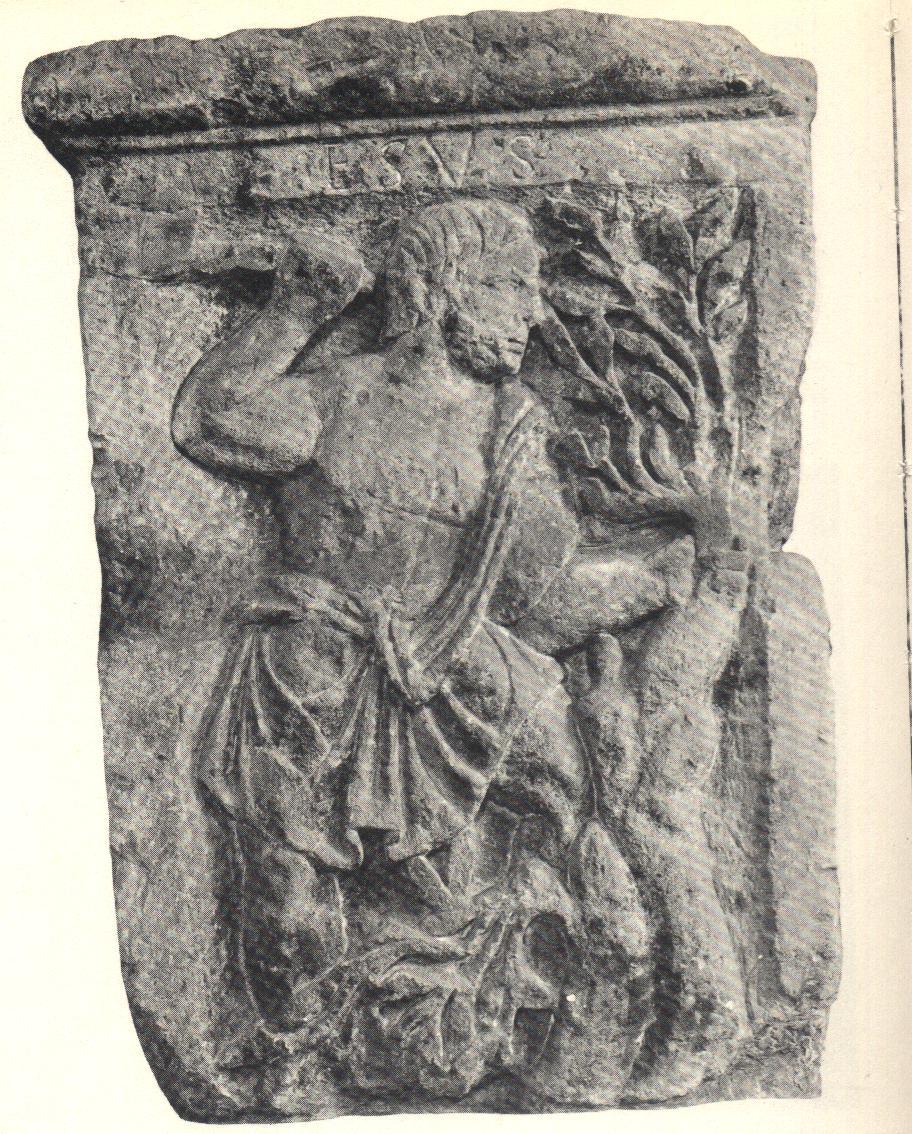
- In the first, found on the Nautes Altar in Paris (under the choir of Notre Dame cathedral in 1711), we have his name, ESVS, carved plainly above the image of a wood cutter working at what appears to be a willow tree.
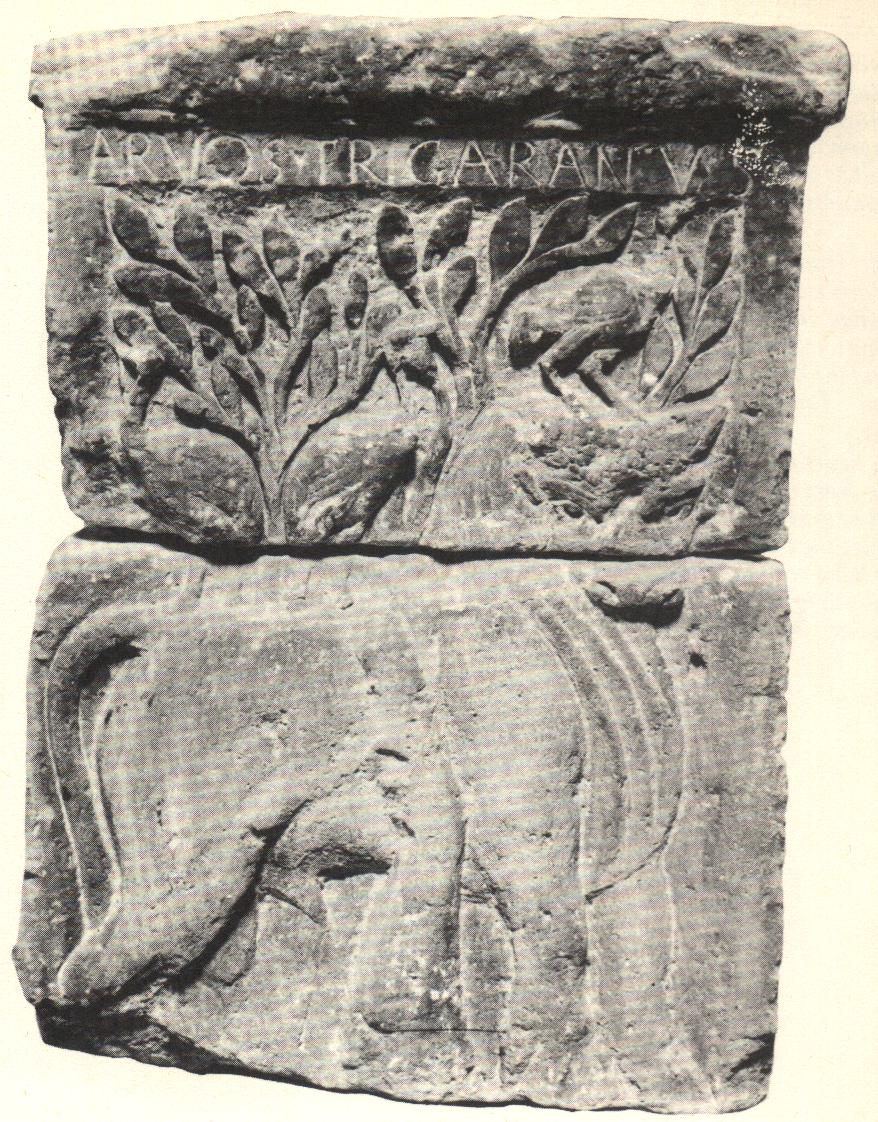
- Also on this altar, we find the relief of a bull. Three cranes are on its back, and the background is the same kind of tree that Esus is chopping down in the first relief. This panel is labled "Tarvos Trigrannus", or Bull with Three Cranes.
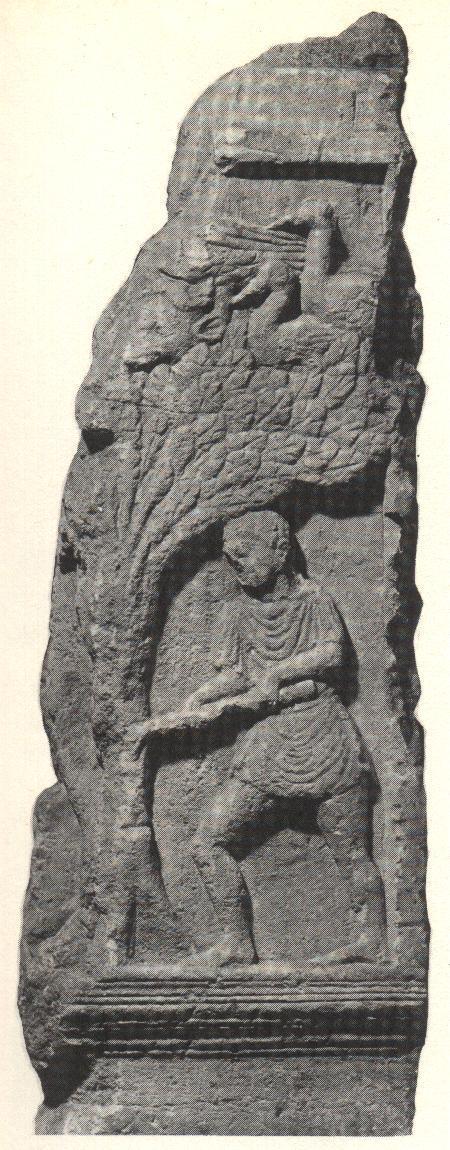
- The second relief of Esus was found in Treves. This relief is not labled with any name, but you'll see in a moment why they are correlated as depicting the same myth.
- In this relief, we see a man cutting down a tree (this tree is stylized differently, but is probably still a willow). Above him, we can see two cranes and part of a third in the top of the tree, and the head of a bull also sits in the top of the tree. This relief was dedicated to Mercury by a person called "Indus".
- These reliefs obviously go together, and depict the same myth.
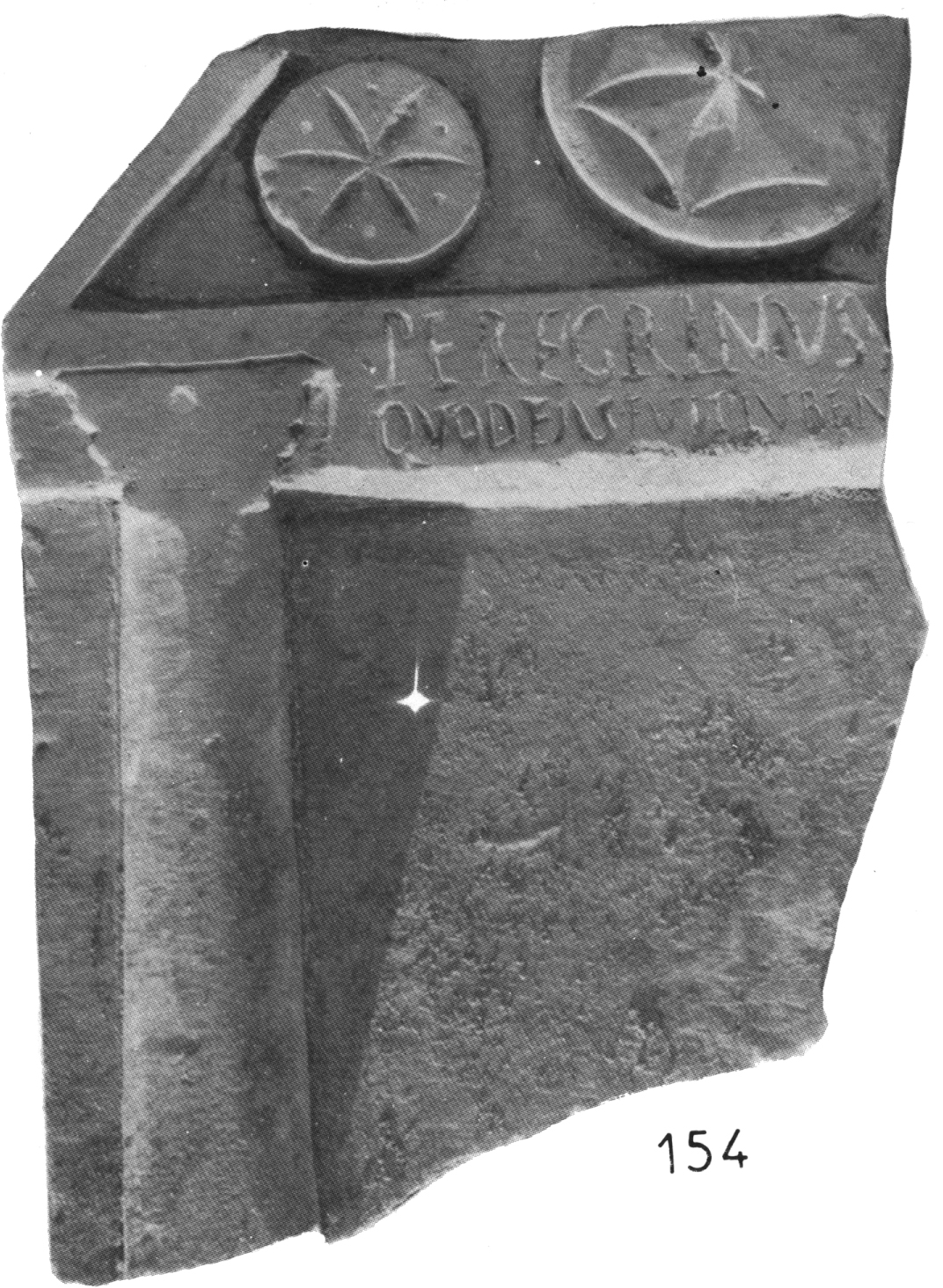
- Another relief that does not depict the deity himself included an inscription to Esus was found in Algeria. This inscription reads: Peregrinus [---] | quod Esus fuit iuben[s---]. It is, unfortunately, incomplete.
- There is a magical incantation to Esus, which reads: "XI EXV CRICON EXV CRIGLION AISVS SCRI SV MI0 VELOR EXV GRICON EXV GRILAV." (translated, this means something like: "Rub out of the throat, out of the gullet, Esus, remove thou thyself my evil out of the throat, out of the gorge.") This would indicate that Esus was called on for healing, particularly of the throat (though other healing may also have been possible, we just don't have the source to verify it). This appears to link Esus more strongly with Mercury than with Mars.
- What can we make of this? Well, everyone's got an answer to Esus, it seems. Let's start with the name:
- Esus: Often taken to mean "Lord" or "Master", we can look at it also as potentially meaning "Furious/Inspired God" (from PIE *eis-) or possibly "Respected/Honoured God" (from PIE *ais-), or possibly "The God who grants desires" (from PIE *is-)
- The cutting down of the tree is debated fully, and I can't make a case for why this is done right now. The Bull and the Cranes seem integral to whatever myth this is, though, and I expect that there's a bull sacrifice in here somewhere. Possibly, we have the beginnings of a world tree myth, or even a creation story.
- I do not believe that Esus can be associated with Lugh, at least not directly. Part of this is because there is a deity on the continent called "Lugos," who we know from place names.
- I also fundamentally disagree that Esus and Jesus can be connected, even remotely.
- Teutates:
- Roman name: Mercury/Mars-Teutates. Like Esus, Teutates is associated with both Roman divinities. This seems the deity more likely to be associated with Mars to me, however.
- Berne Commentaries: The sacrificial victims of Teutates are said to be asphyxiated in mead
- We have no reliefs or representations of this deity. We can only assume that he is indeed important. Perhaps he is the Dis Pater mentioned by Caesar, for he is certainly a tribal god of some sort ("teuto"="tribe/people" in name elements)
- His name does show up in inscriptions, as far afield as Essex and Southern Gaul. He has shrines in several places in Britain.
- This deity my very well have vastly different attributes from tribe to tribe, and may even be different for each nuclear family.
- I do not believe that Teutates can be associated with Cu Chuliann
- Taranis:
- Roman name: Juipter-Taranis. This identification makes sense, as Taranis is clearly a sky god with thunder and lightning attributes.
- Berne Commentaries: Sacrifices to Taranis were said to be burned alive. This may be an allusion to the great "burning men" of Caesar's commentaries.
- Miranda Green (called the Max Mueller of our generation by Cei: "No wheel is safe from Miranda Green!") points first to the wheel he holds and shouts, "Aha! A solar deity!" I admit that this is a darn good bet, but we might not be too quick to judge. Remember, this is definitely a wagon or chariot wheel, and the sound of chariots is very much like that of thunder, which is his name, "One who thunders". Taranis is very much associated with war, as the inscriptions show (and, if we are inclined to accept them as "reliable"), the Berne Commentaries call him "praeses bellorum," or "master of war."
- Very interestingly, Green herself notes that there is no "direct evidence" that Taranis is a solar deity at all. This is an assumption gleaned from Jupiter's place in the Roman pantheon.
- We have little archological evidence that Taranis is an important deity, so we're really taking Lucan at his word. We can, however, show that his cult was widespread, for we have 7 altars, ranging from Britain, through Gaul, into Germania, and finally in Dalmatia.
IV. Epona:
- We are very fortunate with this deity, for she is well attested, and her cult was brought back to Rome.
- Apuelius, in The Golden Ass, describes an altar to Epona in the stables. The image is dressed in roses, and Apuelius tells us that eating them will turn the donkey back into the man. (This is a comedy, of course, so be careful.)
- The Roman cult celebrated her feast day on Dec. 18. She is highly important to the Roman Cavalry, who brought her to Rome. Given the makeup of Rome's cavalry troops (i.e. decidedly non-Roman), we can safely assume that she serves the same role in Gaul (protectress of horsemen, somewhat a battle goddess).
- We often think of her as a fertility goddess, and there is evidence to bear this out, but we cannot ignore the cult, and this changes our view of Epona slightly from a deity who is all about fertility to one who is a warrior Goddess.
V. Cernunnos:
- Source: Ceisiwr Serith, who published a paper for the 2003 Harvard Celtic Colloquium about Cernunnos under his legal name
- Who is Cernunnos? Consider what others call him:
- Lord of Wild Beasts & patron of commercial prosperity - Anne Ross
- Lord of the animals - MacCana and Strutynski
- Lord of living beings - David Rankin
- Lord of beasts and fecundity & A fertility-image - Miranda Green
- But is he really any of these things?
- Other than the panel on the Gundestrup Cauldron, the only hint of "animals" is his pair of antlers.
- We find the name Cernunnos in only one place: the Paris Nautes altar, where we find the reliefs of Esus. the name means "the god with antlers" ("cernu-" = "antler"; "-no-" = theonymic; "s" = 1 p. sing)
- Please keep in mind that there is a huge difference between horns and antlers in the Celtic world.
- Cernunnos' primary attributes are as follows:
- deer's antlers
- arms in orans position (or lap)
- serpent with ram's head
- torcs (worn and held)
- crossed legs (Which are really only thought of as a primary attribute. He appears to have crossed legs because it allowed him to be made "bigger" on the Gundestrup Cauldron and still show all of him. Generally, he does not have crossed legs.)
- In general, Cernunnos can best be described as being a deity of liminality, connected with the underworld in particular, not with animals or wild things. Cei cites Bober (and agrees with her conclusions) when he says that this could possibly be the Dis Pater discussed in Caesar.
- Why is Cernunnos *not* a lord of animals?
- The Gundestrup Cauldron has him surrounded by animals, right? Doesn't that make him a deity of animals?
- Other figures are also surrounded by animals on the cauldron. Also, the animals surrounding him are largely insignificant from an iconographic point of view.
- The two lions are fighting each other.
- Two bulls form a matched set on either side, and look decidely disinterested in Cernunnos.
- There is also the boy riding the dolphin.
- Only the stag and the dog pay attention and seem to fit withe Cernunnos, and Cei works from the position that only these last two are important to Cernunnos.
- Serith's conclusion is very elegant: "Further, there are other deities on the caultron who are surrounded by animals (e.g. the wheel god). If the animals around Cernunnos show that he is Lord of the Animals, I do not think it unfair to say that the animals represented with the other deities declare *them* to be Lords of the Animals, and to ask the question of just how many Lords of the Animals the comissioners of the cauldron had. Even more so, and i say this only slightly flippantly, if the animals show that Cernunnos was Lord of the Animals then doesn't the boy on the fish show that he was the Lord of Boys on Fishes?"
- It appears that the animals are really only decoration.
- The Stag and the Dog, the Serpent and the Torc, and the coins often found in his lap all call to mind this meeting of opposites that makes him a deity of the Underworld. He holds opposites apart (wild and domestic, monsterous and wealth), and in several depictions, he holds Mercury's cadusis. All this leads one to believe that he is a god of the dead, at least leading them to the Otherworld. This is where support for identification with Caesar's god Dis Pater comes from.
VI. Matres/Matronae
- A group of three Goddesses (usually, though sometimes two) who appear to be representations of mothers. They usually carry baskets of fruits, babies, cornucopia, etc. that clearly identify them as "mother-like".
- Please note that all the women are often the same age, so we do not have a "maiden/mother/crone" thing going on.
- Often, they are represented with halos around their heads (that look like 'fros: no, really!). Ususally, the central figure is slightly differnet (elevated, without a halo, or holding something very different).
- Be wary of associating these deities with the Greek Fates.
- Some sources associate these deities specifically with the river Marne in France, but I am not convinced that it is so strong an association, though they may have lent their name to the river.
VII. Nehellenia
- Venerated at two shrines on the North Sea (in modern-day Netherlands), this Goddess is likely a non-Celtic deity who was introduced to the Celts when they arrived. Her name means nothing in Celtic, but appears to mean something like "Steerswoman".
- Her iconography is interesting:
- Her on a ship's prow
- Shown with dolphins
- Always with a dog
- Her shrines have her in "cave-looking" places, under cannopies, etc.
- Interestingly, both her shrines were taken by the North Sea, which engulfed them during antiquity.
- Her cult was very rich, and consisted mainly of maritime traders and merchants.
- A series of images from Espérandieu better illustrates her iconography.
VIII. Sucellus
- Name means "Good Striker"
- Iconography:
- Carries a mallet in his *left* hand (though occasionally he carries it in his right)
- Often accompanied by a dog
- Sometimes with a cask or drinking jar
- I'll make the case that he is, and is not he's associated with Thor, despite the hammer.
- He seems to be a potentially cthonic (from the earth) deity, and his hammer is likely associated with fertility (as is Thor's).
- I might suggest, instead, Charon, whose Etruscan counterpart carries a mallet and the dog may also be associated. The Etruscans, are, of course, not an IE group, but their trade routes ran through the area, and he could, potentially, be an imported deity.
- His associations with the underworld seem fairly clear, so some consider him to be a psychopomp.
- Accompanied also by Nantosvelta in a relief in Sarrebourg (near Metz, France, and the Mithraeum there), we simply aren't sure about him. There is a decided lack of evidence about him.
- I'm interested, though, in the hammer in his left hand, and the drink in his right, and wonder what exactly that entails.
IX: Nantosvelta
- Name means "winding river" or "meandering brook" (amusing translation difference since a river and a brook are very differnet things).
- She is depicted making a sacrifice on an altar, and she has a small house on a long pole in the other hand. This could, potentially, be a bee-hive.
- She is often accompanied by a raven.
X. Lugus
- We call him "Lugus" or "Lugos," but we don't have a single Gaulish source for this name. Apparently, he is not recorded, but is subsumed by the role of Mercury, a popular Roman deity in Gaul. It seems that the very close identification between these two deities was so strong that it obliterated the original Celtic name for the native deity.
- Images often make him appear as the Roman Mercury: beardless, youthful, carrying a caduceus, with a purse, and accompanied by a cock.
- Most often, he is seen as a married pair to Rosemarta, a local divinity.
- For an inspired bit of poetry about Lugus and Rosmerta, see "The Marriage of Lugus and Rosmerta"
- How do we know he ever existed?
- The city of Lyon derives its name from a deity of similar name, or so we may suppose. The Roman name for Lyon was "Lugdunum," typically thought to be a Latinization of the Gaulish place-name "Lugodunon." Augustus chose Lyon as the capital of Gaul, and as the site of his own anual festival, held on August 1. It appears to be a continuation of an earlier Celtic festival. As we know, Lugh is commemoriated on Aug. 1 in other Celtic countries.
XI. Rosemerta
- Her name means "great provider"
- Almost no information remains on her, but her iconography is obviously about fertility. Perhaps a deity of the land.
- Sometimes seen receiving Mercury's coins, and sitting on a throne, and she sometimes receives the iconography of Mercury (including the caduceus), who she is often close to and depicted with.
XII. Belenos
- His name means "bright" or "brilliant"
- Healer and a sun deity, associated with Apollo (hyphenated with him as "Apollo-Belenus" (note latin u)
- Usually a young deity, but once represented as an old man covered in stars.
- Attempted to be linked to Baal (under the spelling "Bel"), now fully rejected.
Content © 2003 - 2011, Michael J Dangler
Updated on 02/05/2011. Site Credits / Email Me!
Basic site design from ADF.org
(Yes, I stole it!)
|